

Please login to post your comments.
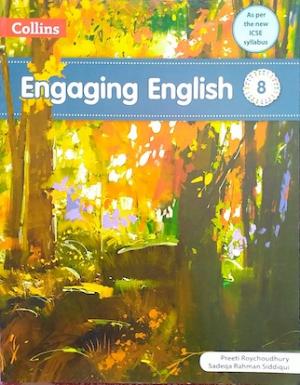
The Road Not Taken
Robert Frost
About Robert Frost
Robert Frost (1874 - 1963) was an American poet who received four Pulitzer prizes in Poetry. His poems often depict American rural life in the early twentieth century. Some of his best-known poems are 'Stopping by Woods on a Snowy Evening' and 'Mending Wall'.
Two roads diverged in a yellow wood,
And sorry I could not travel both
And be one traveller, long I stood
And looked down one as far as I could
To where it bent in the undergrowth;
Then took the other, as just as fair,
And having perhaps the better claim,
Because it was grassy and wanted wear.
Though as for that the passing there
Had worn them really about the same.
And both that morning equally lay
In leaves no step had trodden black.
Oh, I marked how way leads on to way,
I doubted if I should ever come back.
I shall be telling this with a sigh
Somewhere ages and ages hence:
Two roads diverged in a wood, and I −
I took the one less travelled by,
And that has made all the difference.
Available Answers
- 1.
Why does the poet use the adjective 'yellow' to describe the wood?
- 2.
What was his first reaction to not being able to travel both the roads?
- 3.
How far did the poet try to see down the first road?
- 4.
What did the poet decide about the first road? Why?
- 5.
Then took the other, as just as fair, / And having perhaps the better calm
- What is being referred to as 'the other'?
- What does the poet mean by the phrase 'better claim'? Why did it have a better claim?
- Even though the 'other' had the better claim, how was it similar to another path?
- 6.
And both that morning equally lay / In leaves no step had trodden black.
- What do the phrases 'lay in leaves' and 'trodden black' mean?
- What did the poet ultimately decide to do?
- What does he say about his choice?
4 more answer(s) available.
Comments
In the 5 th question the word calm is written but it will be claim ...
pls correct it
22 Feb 2026Arjubanti K.